Metal components can corrode during storage and transportation when moisture, oxygen, contaminants and other environmental conditions affect their surfaces. For manufacturers and exporters, corrosion can mean rework, rejected parts, delayed deliveries and additional costs. VCI packaging is one method used to protect suitable metal components by creating a protective environment inside the package. Understanding how it works—and when to use it—helps businesses make better packaging decisions.
What Is VCI Packaging?
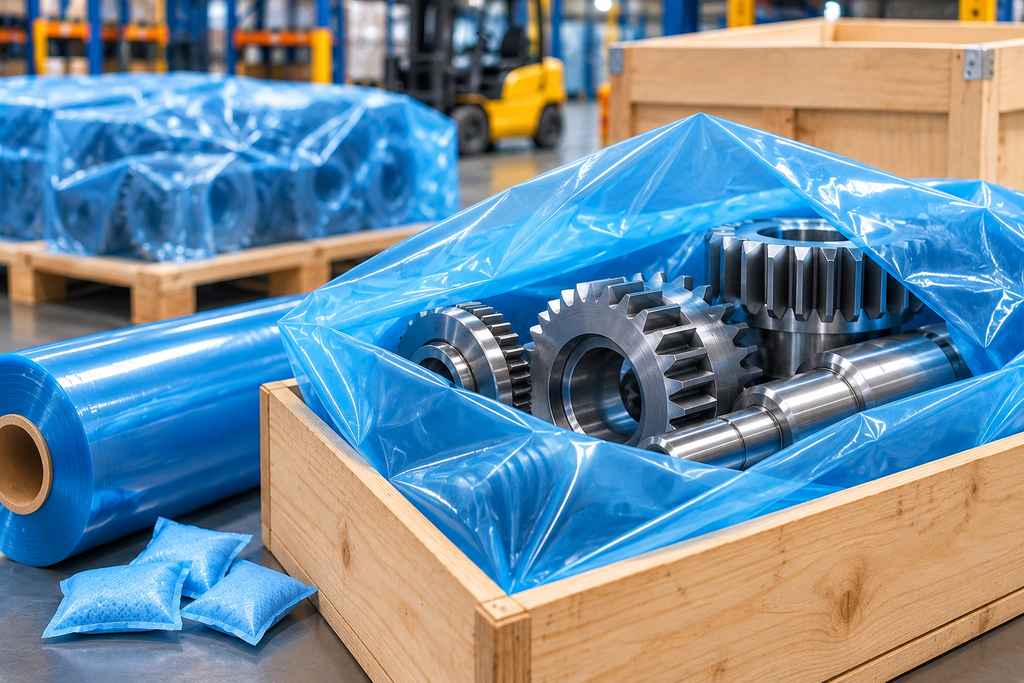
VCI stands for Volatile Corrosion Inhibitor. VCI packaging uses materials that release corrosion-inhibiting molecules into the enclosed space around a metal component. These molecules can settle on exposed metal surfaces and form a thin protective layer that helps reduce the electrochemical reactions associated with corrosion.
VCI products are available in different forms, including films, bags, papers, emitters and other packaging formats. The correct option depends on the metal, component geometry, package design, storage conditions and expected protection period. VCI packaging is not a universal substitute for cleaning, drying, good handling or appropriate barrier protection.
How Does VCI Packaging Work?
When a compatible VCI material is placed around or inside a suitably enclosed package, its active compounds release vapour-phase inhibitors. These vapours move through the package atmosphere and reach accessible metal surfaces. The inhibitor molecules form a molecular-scale protective layer that helps interrupt the corrosion process.
The Basic Protection Process
- The metal component is cleaned and prepared according to the packaging specification.
- A compatible VCI film, bag, paper or emitter is selected and placed as designed.
- The package is closed so the protective vapours can build up within the intended space.
- VCI molecules disperse through the enclosed atmosphere and reach exposed metal surfaces.
- The protective environment helps reduce corrosion risk while the component remains correctly packaged.
The effectiveness of the system depends on correct product selection, package volume, sealing, material compatibility, temperature, exposure and the manufacturer’s instructions. Always validate the packaging method for the specific application.
Key Benefits of VCI Packaging for Metal Components
1. Helps Prevent Corrosion During Storage and Transit
VCI packaging is designed to protect suitable metal surfaces from corrosion while parts are stored or transported in an enclosed package. It can be useful for components that may spend time in warehouses, shipping containers or distribution networks before reaching the customer.
2. Reaches Complex Shapes and Hard-to-Access Areas
Because VCI inhibitors travel through the package atmosphere, they can reach accessible surfaces that may be difficult to cover with a conventional liquid coating. This can be helpful for components with cavities, recesses, threads and intricate geometries, provided the package is designed to allow vapour distribution.
3. Can Reduce the Need for Some Temporary Protective Coatings
Depending on the application, VCI packaging may reduce or remove the need for certain temporary oils or greases. This can simplify handling and may reduce cleaning work before assembly. However, the decision depends on the component, process requirements and VCI supplier guidance. It should not be assumed that every part can be packed without a separate protective coating.
4. Supports Cleaner Handling
Some VCI packaging formats allow components to be protected without direct application of a liquid rust-preventive product. This can help keep parts cleaner during storage and make unpacking more convenient. The actual result depends on the VCI material and the cleanliness requirements of the next process.
5. Available in Different Packaging Formats
VCI technology can be incorporated into films, bags, papers and other formats. This gives packaging teams flexibility to select a method for individual parts, kits, pallet loads, crates or larger assemblies.
Types of VCI Packaging Materials
VCI Films and Bags
VCI films and bags combine a physical packaging layer with corrosion-inhibiting properties. They are used to enclose individual components, groups of parts or larger assemblies. Film thickness, size, closure method and compatibility should be selected for the load and shipping environment.
VCI Paper
VCI paper is often used to wrap, interleave or separate compatible metal components. It can be useful for smaller parts, flat products and applications where direct placement of protective paper is practical. Confirm that the paper type is suitable for the metal and surface finish.
VCI Emitters
VCI emitters are products designed to release corrosion inhibitors within an enclosure. They may be used in cabinets, equipment housings, crates or other enclosed spaces. Placement and quantity should follow the product supplier’s recommendations.
Combined Barrier and VCI Systems
For demanding storage or export conditions, VCI materials may be used with moisture-barrier packaging, desiccants or other protective measures. These systems address different risks: VCI targets corrosion at metal surfaces, while a barrier and desiccant strategy manages moisture entering or remaining within the package. The combination must be designed and validated as a complete system.
Which Metal Components Can Use VCI Packaging?
VCI packaging is used for many industrial metal products, but compatibility varies by inhibitor formulation and metal type. Common applications may include:
- Machined steel and iron components.
- Automotive parts, fasteners and engineering assemblies.
- Metal tools, dies, fixtures and spare parts.
- Bearings, gears, shafts and precision components.
- Fabricated metal parts and industrial equipment.
Different metals and alloys may need different VCI formulations. Mixed-metal assemblies require particular care because one material may respond differently from another. Check the VCI supplier’s compatibility guidance, especially for aluminium, copper, brass, zinc, plated parts, sensitive finishes and electrical or electronic assemblies.
VCI Packaging vs. Traditional Rust-Preventive Methods
VCI packaging and conventional corrosion-prevention methods work in different ways. A rust-preventive oil or grease creates a protective coating on the component, while VCI packaging releases inhibitors into the package atmosphere. Desiccants help control moisture, and barrier films limit moisture exchange. These methods may be used separately or together depending on the application.
| Method | Main role | Key consideration |
| VCI packaging | Creates a corrosion-inhibiting environment around compatible metal surfaces | Correct formulation, enclosure and compatibility are essential |
| Rust-preventive oil or grease | Leaves a protective coating on the component | May require removal or cleaning before the next process |
| Desiccants | Absorb moisture inside a suitable package | Must be correctly sized and used with an appropriate enclosure |
| Moisture-barrier packaging | Limits moisture vapour entering or leaving the package | Seal integrity and package design matter |
How to Select the Right VCI Packaging Solution
Choosing a VCI product should begin with the component and the conditions it will face. Consider the following before finalising the packaging specification:
- Metal type and alloy: identify every metal in the component or assembly.
- Surface condition: note whether the part is machined, polished, plated, painted or coated.
- Geometry: identify cavities, recesses, threads and areas that may restrict vapour circulation.
- Package size: calculate the enclosed volume and select materials according to supplier guidance.
- Storage and transit: consider duration, temperature changes, humidity and shipping route.
- Packaging closure: determine how the package will be sealed and whether it can remain closed.
- Downstream process: confirm whether the component must be unpacked, cleaned or assembled immediately.
- Validation: test the selected system under representative storage and transport conditions.
Common VCI Packaging Mistakes to Avoid
- Using a VCI product without checking compatibility with the metal or finish.
- Packing components while they are wet, contaminated or not suitably prepared.
- Leaving the package open or using an unsuitable closure that prevents the intended protective environment.
- Using too little or incorrectly placed VCI material for the package design.
- Assuming VCI alone will control severe moisture exposure or condensation.
- Mixing different VCI products or packaging materials without checking compatibility.
- Exceeding the supplier’s recommended storage conditions or protection period.
- Failing to inspect, test and document the packaging process.
Where Is VCI Packaging Used?
VCI packaging is relevant to industries that store or transport metal components and need to preserve surface condition. Applications can include automotive manufacturing, engineering, machinery, fabrication, metalworking, electrical equipment and industrial spare-parts supply. For exporters, the packaging method should be considered alongside the route, duration, climate and destination handling process.
Frequently Asked Questions
What does VCI stand for in packaging?
VCI stands for Volatile Corrosion Inhibitor. VCI packaging materials release corrosion-inhibiting compounds into an enclosed package to help protect compatible metal surfaces.
Does VCI packaging prevent all types of rust?
No packaging system can guarantee protection in every condition. Performance depends on the metal, VCI formulation, package design, sealing, preparation, storage environment and correct use.
Can VCI packaging be used for export shipments?
Yes. VCI materials are used in export packaging for compatible metal components. The complete system may also need moisture-barrier protection, desiccants and suitable outer packaging depending on the route and conditions.
Is VCI packaging suitable for all metals?
No. Compatibility varies by VCI formulation and metal type. Check supplier recommendations for each metal, alloy, coating and mixed-metal assembly.
How long does VCI packaging protect metal components?
There is no single protection period for all VCI products. It depends on the material, package design, sealing, storage conditions and supplier specifications.
Can VCI packaging replace rust-preventive oil?
In some applications, VCI packaging may replace certain temporary protective coatings. This must be confirmed through compatibility checks and testing against the component’s storage, transport and process requirements.
Should metal parts be cleaned before VCI packaging?
Yes. Components should be prepared according to the packaging specification. Moisture, fingerprints, salts, machining residues and other contaminants can affect corrosion performance.
Conclusion
VCI packaging offers manufacturers and exporters a practical way to help protect compatible metal components from corrosion during storage and transportation. Its vapour-phase protection can reach accessible areas of complex parts, and its availability in films, bags, papers and emitters gives businesses several packaging options. The best results come from matching the VCI material to the metal, preparing components correctly, designing a suitable enclosure and validating the system under real operating conditions.
Discuss Your Industrial Corrosion-Protection Requirements
Looking for packaging solutions to protect metal components during storage or international shipping? Visit RR Group Industries to discuss your product type, packaging format and corrosion-protection requirements.