An automotive supply chain runs on precision and timing. A gearbox that arrives scratched, a machined shaft that picks up rust on the way, or a batch of sensors that gets crushed at the bottom of a stack can stop an assembly line. When production runs on just-in-time schedules, a packaging failure is not a small problem. It becomes a delay that travels down the whole chain.
That is why automotive packaging has to do much more than hold parts in a box. It has to protect each component from impact, vibration, moisture and contamination, fit the line-side workflow at the customer’s plant, and keep cost per part under control. This guide explains the main risks and the packaging solutions that handle them.
Why Automotive Packaging Is Different
Auto components vary enormously in size, weight and sensitivity. A single supplier may ship forged shafts, painted body panels and electronic modules in the same week. The packaging has to cope with:
- Weight and shape: engines, axles and castings need rigid, load-bearing packaging
- Surface finish: machined and painted surfaces scratch or corrode easily
- Tight delivery windows: just-in-time lines leave little room for delays or rework
- High volumes and repeat routes: the same parts move between the same plants again and again
- Export and CKD shipments: parts travel long distances by sea and face more handling
- Cost and sustainability pressure: buyers want lower cost per part and less packaging waste
Main Transit Risks for Auto Components
Before choosing packaging, it helps to know what can go wrong:
- Impact and shock from forklifts, loading and unloading
- Vibration on long road or rail journeys that wears and loosens parts
- Compression when loads are stacked or stored for long periods
- Corrosion on bare metal during sea freight, monsoon storage and humid yards
- Dust, moisture and contamination that affect finish and electronics
- Scratches and dents from parts rubbing against each other or the container
The chart below shows how these risks typically weigh on different component families. Ratings are indicative and will vary by part design and route.
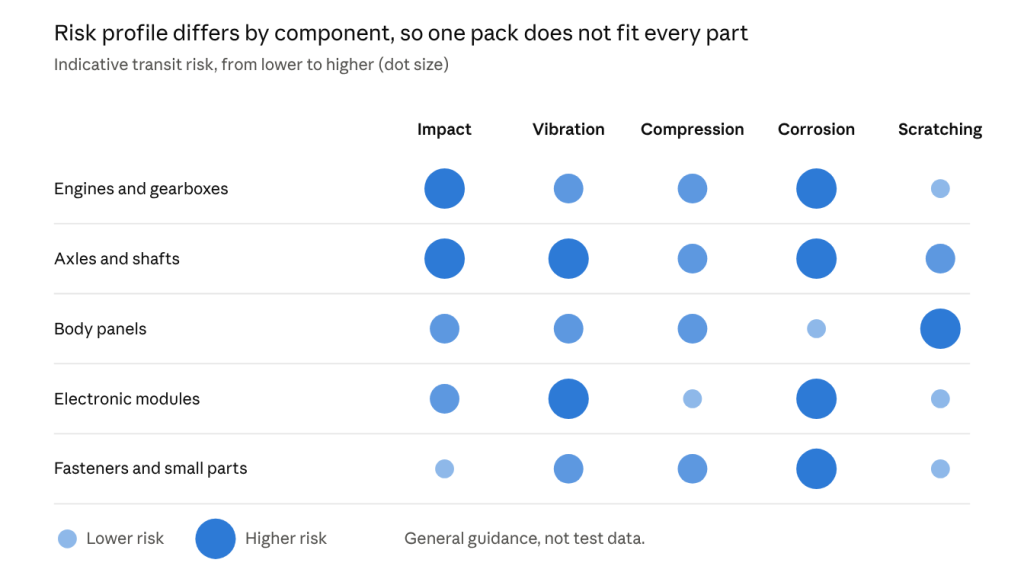
Heavy shafts and gearboxes need load-bearing packs, machined parts need rust protection, and panels need soft surface contact.
Packaging Solutions for Automotive Components
1. Wooden pallets and crates for heavy parts
Engines, gearboxes, axles and large castings need packaging that can carry high loads and be stacked safely. Engineered wooden pallets and boxes with proper bracing keep heavy parts steady and make forklift handling safer.
For repeat routes and exports, nail-less packaging adds faster assembly, cleaner dismantling and easier reuse.
2. Corrugated packaging for light and medium parts
Multi-ply corrugated packaging with dividers, inserts and cushioning works well for smaller components, fasteners and sub-assemblies. It is light, easy to print and label, and recyclable.
3. Returnable packaging for closed-loop supply chains
When parts move between the same supplier and plant on a regular cycle, returnable packaging such as polypropylene boxes can cut cost per trip and reduce waste. They are durable, easy to clean and can be fitted with custom dividers to hold parts in position.
Returnable packs cost more at the start, then pull ahead as the same boxes keep making trips.
4. Metal trolleys, racks and fabricated packaging
Body panels, large assemblies and awkward shapes often travel best on fabricated metal packaging. Racks and trolleys hold parts in a fixed orientation, protect surfaces and move straight from the truck to the line side.
5. VCI and moisture protection for machined parts
Bare steel and machined components can start to rust within days in humid conditions. VCI packaging releases a protective vapour inside the pack, so parts stay clean without heavy oil coatings. This is especially useful for sea freight and monsoon-season storage.
6. Heat shrink and stretch wrapping for unitised loads
Palletised loads can be secured and sealed against dust and water with heat shrink packaging. It keeps stacks tight in transit and shows if a load has been opened.
Packaging Services That Support the Supply Chain
Good packaging is only part of the picture. How and where it is applied matters just as much.
- Onsite packing: our onsite packaging services bring crews and materials to your plant, so parts are packed where they are made, with fewer handling steps and less damage risk.
- Warehouse management: warehouse management support helps with storage, picking, kitting and dispatch planning.
- Equipment support: MHE lease modeling gives access to forklifts and pallet jacks without a large capital outlay.
Export and CKD Shipments: Extra Points to Check
Parts shipped overseas face longer transit and stricter rules.
- Wooden packaging usually needs treatment and marking under ISPM-15. Check the IPPC ISPM standards page and your destination country’s rules.
- Plan for humidity, condensation and salt air with VCI or desiccant protection.
- Label and document packs to match customer and customs requirements. Industry groups such as AIAG publish packaging and labelling guidance used across the automotive sector.
- Validate new designs with drop, vibration and compression tests. Bodies such as ISTA publish widely used transit test procedures.
How to Choose the Right Automotive Packaging
Use this checklist when selecting or redesigning packaging:
- Part weight, size and fragility: decide how much rigidity and cushioning you need
- Surface and corrosion risk: painted or machined parts need soft contact and VCI protection
- Route and volume: closed-loop routes favour returnable packaging, one-way export often favours crates or corrugated
- Line-side needs: packaging should open easily and present parts in the right orientation
- Handling method: match pack sizes to your forklifts, racks and docks
- Total cost per part: compare packaging, handling, damage and return costs, not just the unit price
Common Mistakes to Avoid
- Using the same pack for every part: one standard box rarely suits both a shaft and a sensor
- Ignoring vibration: parts that look safe in a static test can wear in long-haul transit
- Skipping rust protection: corrosion damage often appears only after delivery
- Choosing on unit price alone: damage and rework usually cost more than the packaging
- No sample trial: run a trial consignment before moving to full volume
Conclusion
Protecting components during transit comes down to matching the packaging to the part, the route and the production schedule. Heavy parts need rigid, load-bearing crates. Light parts can ride in engineered corrugated. Closed-loop routes gain from returnable packaging. Machined parts need rust protection. And across all of them, packing at the source and good warehouse support reduce handling and damage.
A well-designed packaging system does more than prevent damage. It keeps your supply chain on time and your cost per part predictable.
Talk to RR Group About Automotive Packaging
RR Group of Industries has over 30 years of experience designing wooden, nail-less, corrugated, metal and returnable packaging for automobile and engineering clients, from our base in Pune.
Request an automotive packaging consultation or call us at +91 992 2966 457, or email info@rrpackaging.net.
Frequently Asked Questions
What is the best packaging for heavy auto components like engines and axles? Engineered wooden crates or pallets with bracing are usually the best option, because they carry high loads and stack safely. Nail-less designs add faster handling and easier reuse.
When does returnable packaging make sense for auto parts? It works best on regular, closed-loop routes between the same supplier and customer, where boxes can be returned and reused many times.
How do I prevent rust on auto parts during shipping? Use VCI packaging, desiccants or moisture barriers inside the pack, and plan extra protection for sea freight and humid storage.
Do auto parts exports need ISPM-15 compliant packaging? If the packaging uses wood, most destination countries require ISPM-15 treatment and marking. Always confirm the rules of your destination.
Can packaging be done at our plant? Yes. Onsite packing brings crews and materials to your facility, which reduces handling and transport between production and dispatch.